Dr Josephine Deguara, ITLSIG Committee member and Research Co-ordinator visited Istanbul between 24th – 30th June, 2024. The main aim of the visit was for Josephine to take part at the Childhood, Education & Society (CES) conference held at Istanbul Kültür University (Figure 1). Josephine co-presented two research presentations: Navigating educational inequalities beyond the pandemic:Parents’ perspectives on ensuring a more equitable education for children (Deguara, Milton, Bonello, Camilleri & Muscat)) and Exploring educators’ perceptions and position of children in their understanding of an emergent curriculum: Children’s agency in pedagogical decision-making (Gauci, Deguara & Chesworth) (Figure 2). However, she took the opportunity to meet Dr Fahimeh Farjami, ITLSIG Committee member and co-secretary of ITLSIG who is based in Istanbul for networking. Josephine and Fahimeh first met each other online through the ITLSIG Committee meetings. This was the first time they met face-to-face where they used their time for networking and to know each other better.
Figure 1: CES Conference Figure 2: Josephine presenting one of her papers
Josephine’s Experience
As soon as I got confirmation that our abstracts were accepted, I got in touch with Fahimeh Farjami. Fahimeh prepared an impressive itinerary, detailing all the important sites to visit. She was very welcoming and took me and my colleagues on a 2-day tour of Istanbul, visiting the most impressive areas and sites, starting with Hagia Sofia Mosque, and the amazing Basilica Cistern (Figure 3) which lies beneath the city of Istanbul and is adorned with colourful lights which together with the reflection from the water creates a mesmerising and magical atmosphere.
Figure 3: The Basilica Cistern-a mesmerising experience created by the reflection of light on water
We also had a stroll around Gülhane Park (Figure 4) and the streets in the Fatih area with its typical shops and restaurants (Figure 5) which was captivating.
Figure 4: Gulhane Park Figure 5: A typical restaurant in the Fatih area
The Grand Bazaar offered an amazing experience, with shops adorned with typical Turkish souvenirs (Figure 6): from carpets to Kashmir scarves, to expensive and colourful chandeliers, Baklava and spices… a truly unique experience, where because of Fahimeh who spoke and bargained with the shop keepers, I lived a unique experience. The Turks proved to be very welcoming, warm and generous people: I was offered free Turkish tea served in the typical Turkish teacups while we chatted with the owner of a shop, and was offered many different types of Turkish Delight while strolling around the Grand Bazaar. At times it felt like I was in one of the Arabian Nights stories – that as magical as it was.
With Fahimeh as guide, we also visited Eminönü port side (Figure 7) Istikal Street and Taksim Square, had tea at one of the most famous coffee shops in Istanbul, Hafiz Mustafa at Sultanahment, ice-cream in the Bebek region (Figures 8 & 9) which is one of the richest areas of Istanbul, and dinner at Galata port, both overlooking the Bosphorus. Fahimeh went beyond: She continued helping us even when we were at the conference, booking taxi for us, checking on us and seeing that we get a good service – that is how remarkable she was.
Figure 6: Turkish SouvenirsFigure 7: Jo & Fahimeh at Eminonu port
Figure 8: Ice-cream time in Bebek regionFig. 9: At the Bosphorus sea
One of the most impressive sights in Istanbul, where East meets West is the imposing Mosques that beautify Istanbul’s skyline (Figure 10) – a memory which I will cherish forever!
Dr. Fahimeh Farjami, who serves as a committee member and Co-Secretary for the ITLSIG, resides in Istanbul, Turkey. She recently learned that Dr. Josephine Deguara, a fellow ITLSIG committee member and the Research Coordinator, was attending a conference in Istanbul with her colleagues from the 24th to the 30th of June, 2024. Until this exciting development, Dr. Farjami’s collaboration with the ITLSIG had been exclusively online, making the prospect of in-person networking a welcome and significant opportunity. In this post she shares her wonderful experience with Jo in Istanbul. Several photos have been shared, a great opportunity to see Istanbul from afar!
Fahimeh’s Experience
I could not wait to meet Josephine in Istanbul. Therefore, I got in touch with her a month before their arrival to tell her how excited I was to host her and the colleagues from Malta University. I informed her about the culture and life style in Istanbul, recommended areas for accommodation and weather forecast, etc. I tried to plan the most practical itinerary to visit around top ten places in the city for their two day-holiday before the Conference.
Just like how cooperative and informative Jo has been in our committee meetings, she gifted me quite valuable information about their research work with colleagues, the Higher Education system and life in Malta, extending an invitation for me to visit their beautiful country. Every minute I spent with her and her lovely colleagues brought me joy and I appreciated her company the most. We had captivating discussions about ethnic backgrounds, cultural differences between the two countries. I must confess that I had such a brilliant experience, thanks to ITLSIG! I am so blessed to be a part of such a cross-institutional network. It goes beyond educational exchange aiding academics to build up strong social and cultural ties above everything, and this definitely is what we all need today to boost our sustainable engagement and cooperation in the education world.
During her stay, I took Jo and her colleagues to Bebek area (photos no 1&2), Galataport (photos no 3&4), Maiden Tower (photo no 5), Sultanahmet area, Grand Bazar, Fatih, Eminunu, Karakoy Bridge, Taksim (photos no 6&7), Sishane area, Galata Tower (photo no 8), and Bosphorous Bridge (photo no 9), Blue Mosques, Basilica Cistern (photo no 10).
By Dr. Xia Zhu, Lecturer, Open University & ITLSIG Communications Co-ordinator
I was invited as one of the keynote speakers at the Global Chinese Teaching and Learning Symposium, led by Fudan University with co-organisers from nine other Chinese universities.
My talk centred on “Deploying simulations to bridge the theory-practice divide for learning facilitation in business courses”. This talk is based upon my Scholarship in partnership with Dr Edwin Rajah, another member of ITLSIG who works at Otago Polytechnic in New Zealand. Our work focuses on exploring MBA students’ perceptions of using the web-based marketing strategy simulations in their learning with three objectives:
to assess if the business simulations supported student engagement and participation.
to evaluate if the business simulations supported the development of higher order critical thinking capabilities.
to explore if the business simulations supported the development of soft skill for the participant.
The key takeaways that I shared with colleagues during the talk include the advantages and drawbacks of using simulations in teaching and learning. Simulation games offer many benefits; however, this approach should not be treated as an exclusive tool for teaching and learning, rather it needs to be linked to learning outcomes and used as complementary to other traditional methods to achieve the teaching and learning outcomes. The session was conducted using Chinese language. Despite being fluent in Chinese, it took me several hours to put the slides together as I had to translate everything from English to Chinese. I realised the difficulty of switching from one language to another, especially where some key technical terms are used. The session was live streamed in two platforms and recorded for playback as well. I thoroughly enjoyed the opportunity to participate at the Symposium, and I am delighted to be one of the pioneering speakers in the collaboration between ITLSIG and other Higher Education Institutions across the globe.
By Dr. Josephine Deguara, ITLSIG Research Coordinator
The ITLSIG is delighted to communicate that we are working with 67 contributing authors on the publication of two books with Emerald Publishing House.
The book titles are shown below:
Volume 1
Innovations in Pedagogical Practice and Curriculum Development in Higher Education: Contemporary Global Perspectives
Volume 2
Innovations in Assessment, Student Experiences, and Professional Development in Higher Education: Contemporary Global Perpsectives
The chapters are drawn from HE practitioners from diverse cultural and geographical contexts including Europe, Asia, the Middle East, North America, and Australasia, offering fresh insights into current realities and innovative practices in HE.
The two books are expected to be published in 2025. Watch the space!
Revived! Yes, this was the feeling we got after attending a conference in Oxford. How many of you find conferences reviving or rejuvenating? We felt really super-charged!
We had an opportunity to participate at the Living Values Education Conference at the Global Retreat Centre in Oxford, UK on 20-22 October. The Conference was hosted by the Living Values Education-British Isles and the conference theme was “Nurturing hearts and Educating Minds”.
The conference emphasised the significance of Values Education and was a great chance to network with fellow professionals who are involved in values education in Schools, Charities and Universities.
Gladson facilitated a Values-based collage activity on Togetherness. In this activity, Gladson asked participants to reflect on the question: “What does the world need now?” Several insights were generated and these were presented on a Chart using post-it notes.
Here are some key points from the conference. We would love to hear your thoughts on these ideas, so please share your comments below.
1. Education is a dialogue between generations about matters of importance. Does this resonate with your own experience of it?
2. Education must foster hope, love and justice
3. We can’t do everything but we shouldn’t do nothing
4. The human qualities we need to preserve and encourage are: an open heart; curiosity & inquisitiveness; Positive right relationships.
5. What is your dream in life?
6. Heart-based educators can make a lasting difference to their learners’ lives
7. We are all uniquely made but we are better together.
8. We are human ‘beings’ and not human ‘doings’-sometimes you need to take a break! Remember the traffic control system.
9. The future of living values education is you!
Feel welcome to contact us if you want to hear more about living values education and how you can be an agent of change as a living values educator.
Sobia Kauser is a lecturer in Biomedical Sciences and holds a BSc and PhD from the University of Bradford.
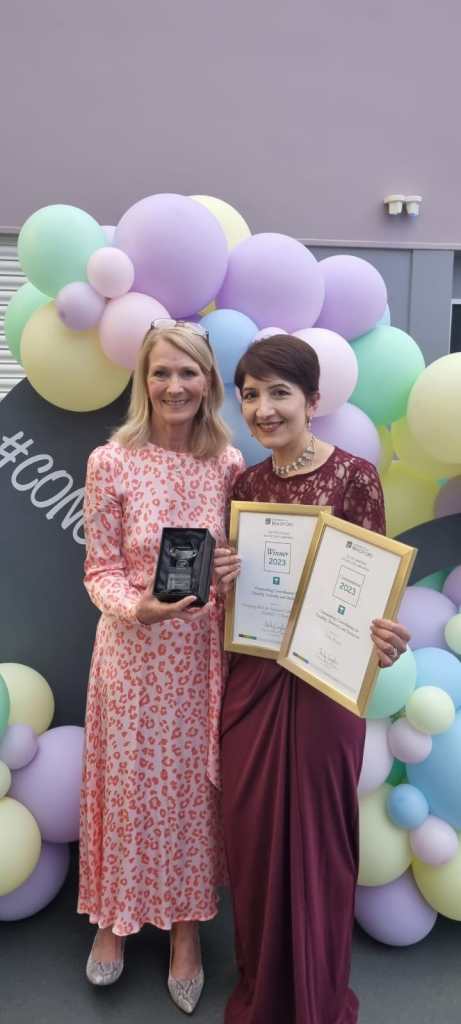
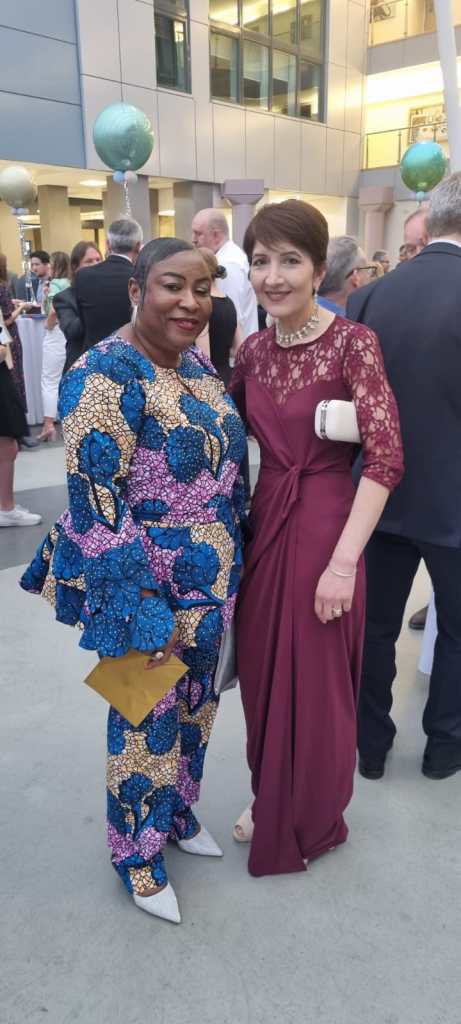
I am passionate about inclusive practise in teaching and learning and I gave a keynote presentation to the group in February on the Managing Risks for Impaired Laboratory Users (MaRILU™) system, which I have designed, developed and implemented. I am pleased to report that this work received the Vice Chancellors Outstanding Achievers Award at the University of Bradford in the EDI category. I also received the Vice Chancellors commendation award for my commitment to inclusive learning and teaching, two awards not bad for one evening! Here are some photos from the event with the Vice Chancellor of the University of Bradford, Professor Shirley Congdon and Professor Udy Archibong Pro Vice-Chancellor Equality, Diversity and Inclusion.
Vice-Chancellor of the University of Bradford, Professor Shirley Congdon (left) with Sobia Kauser (right)
Pro-Vice Chancellor Equality, Diversity and Inclusion, Professor Udy Archibong (left) with Sobia Kauser(right)
The herd instinct can be very powerful, and if it creates a sense of ‘not fitting in’ or ‘not good enough’ this can be a big contributor to poor mental health on campus, including a sense of isolation, depression and even suicide.
Classroom dynamics, lesson design, and the facilitative role of teachers and tutors are all huge contributing factors to teacher and student mental wellbeing.
One key element that should always be factored in is how every person has either naturally Extravert or Introvert (E/I) tendencies. Especially if that person is naturally introverted in a world where in most cultures, extraversion is regarded as the ‘norm’ and is therefore expected of everyone.
Where these E/I needs are not being adequately met, there cannot be effective teaching nor inclusive learning. Instead, both teaching faculty and students can fall victim to disengagement, and debilitating mental conditions also often develop.
Context
Extensive quantitative and qualitative research in the UK report high levels of low mental and emotional wellbeing in its education sector. This equally pertains to both teaching faculty and students.
Resultant fatigue, disengagement, sense of isolation, overwhelm and burnout, the serious consequences to physical health, work performance, and even to the taking of one’s own
life, demand core causes to be identified, taken into account and satisfactorily addressed without compromise.
One core cause is the lack of clear understanding of the differing needs of engagement between extraverts and introverts within the education process, and how they might best be met. Needless to say, where people have neuro-divergent based needs, the effect of E/I considerations will be amplified.
Example scenario
Mary is a non-tenured teaching academic anxious to prove her value. So when her senior messages and asks her to stand in for a fellow faculty member and to take a first year lecture that afternoon she doesn’t feel she can refuse. Luckily, because she knows her natural tendency is towards introversion, she has pre-prepared strategies that enable her to ‘lean into the curve’, give a stimulating, inclusive session that will enable help fulfil the course learning objectives and without the need for her to spend all morning preparing overheads.
Understanding needs
It is important to be clear that E/I tendencies are not a measurement of sociability or shyness but an innate pre-condition on how a person energises in order to be at their optimal. It shows itself in how that person prefers to work, learn, communicate and generally engage with others and, since this is also a fundamental requirement of quality education, this consideration should be adequately embedded in every lesson design.
The assessment of this is that everyone is both heard and listened to, everyone feels they can contribute and can easily do so and, as a result, everyone feels valued and good about themselves.
Depending on one’s natural E/I tendency, (some say it is DNA-based, others environmental, but both are debatable), activities, behaviours and life style will affect one’s sense of energy or tiredness, and also one’s sense of belonging and personal security.
Extraverts source a feeling of energy from being at the hub of lots of differing activities and conversations, where they constantly interact with many others and across a wide variety of interests. The ideal method of interaction involves the opportunity to speak a lot, irrespective whether or not it useful. The benefit lies simply in the act of conversation and social interaction, as this is energising to them. Silence is noticed and can feel uncomfortable.
Introverts source energy from taking their thoughts inward, like a tortoise into its shell. It doesn’t need to be a physical withdrawal; it can even be during a meeting or in the middle of a crowded room. Their interests are more singular and directed where they develop considerable depth of knowledge, in contrast to extraverts who are more satisfied with a surface understanding over a broader range. Introverts work better when they are given.
time to reflect and to research before speaking, but when they do they can be even overly talkative in a subject that is of deep personal interest. They consider that words should be spoken only when there is something useful to say. Silence is comfortable and goes unnoticed.
For Extraverts, words are cheap currency, and they very quickly forget what even they themselves have said. They will interrupt and dominate until they feel heard. They happily take on the lead role, chair meetings and be the spokesperson, the one at the front, and who can speak ‘off the cuff’ with no hesitancy and little or no advance preparation.
For Introverts, words are like gold nuggets. They speak in a considered way, and remember past conversations accurately. If they are interrupted or what they say isn’t adequately acknowledged, they don’t persist to share their ‘gold’ and may even mentally withdraw. Introvert types are more likely to take on the role of the meeting minute taker, and if they have to be spokesperson, the one at the front, they need to be given sufficient time in advance so they can rehearse and feel adequately prepared.
Even a basic awareness of these differences is extremely helpful within teaching and learning frameworks in regard to the impact it can have on both teacher and student prevailing sense of wellbeing.
Here is what AI-ChatGBT has to offer on Bing:
“In education, understanding the different needs of extraverts and introverts can help teachers create a learning environment that caters to both personality types. For example, introverted students may prefer quiet spaces for studying while extroverted students may prefer group work or interactive activities.”
Bing AI-ChatGPT
Like all simplifications, this explanation is like the visible 10% of the iceberg above the waterline. Physical space is one thing, but headspace is the BIG thing. And the differing needs of E/I teacher and student type are both to be adequately factored in such that neither ever feel compromised nor marginalised.
Stuck in comfort
Whether it be subconscious or deliberate, there can be a preference to stay within what is our natural preference and therefore our ‘default’ position. As a result, a teacher can be seen to apply pedagogical methods which are more suited to how they are, rather than take fully into account the spectrum of student predilections.
Alternatively, if teachers come under pressure to change curriculum design in ways that demand another way of doing things that goes against their own E/I tendencies, this can undermine their sense of confidence to do the job to a level where they are satisfied.
The following Diagram 1 is a simplification of E/I causal sources of positive mental wellbeing or potential discomfort and stress.
Diagram 1: The Potential Influence of E/I natural tendencies on both Teacher and Student Wellbeing
Meaningful learning is a mutual exchange and requires both teacher and student to be taken outside their ‘comfort zone’ of preferences, whilst remaining within a ‘wellbeing zone’. An open willingness is needed for this to happen, which is enabled by first creating a learning environment that feels both emotionally safe and where everyone feels they make a valued contribution.
This is facilitated by everyone being led to feel understood and where their communication needs are satisfactorily met.
The following Table 1 offers insights to highlight awareness and to help create pre-emptive strategies.
In universities and business schools when lecture theatres have capacities where hundreds of students attend at a time, it can be even more challenging to facilitate inclusion at this emotional level. However, positive and meaningful teacher/student engagement and therefore learning is still possible, and there is a growing bank of resources provided by teaching faculty on how this can be achieved.
It is also part-core to the free resources and input provided through the Caring on Campus initiative within LifeRoute.
An ABC Approach
The approach being championed here is an ABC of teaching and learning:
A for AWARENESS; B for BALANCE; C for CLARITY.
Awareness of mutual needs, Balance of personal growth and contribution with a sense of safety and respect, and ongoing Clarity from the teacher of the purpose of what is being taught, that it is clearly understood, and why the specific methods and activities have been chosen.
All are to be taken into account in lesson design and delivery that will contribute to the enhancement of the mental wellbeing of all involved and its consequent education value.
The wonderful aspect of raised awareness and desire to equally accommodate both E/I tendencies is that it also encourages the development of many other social and communication/collaboration skills and abilities. Some may term them as ‘soft skills’ or non-cognitive skills.
They are the skills that more and more are being articulated by employers as being most required in the workplace; the skills that Artificial Intelligence does not possess. These skills are at their best when they are values-based, which means they underpin what it means to be human – homo sapiens – the wise ape.
Footnote
The insights shared here have their origins derived from the work of Isabel Briggs, who was intrigued by what she observed as people being of different ‘Types’ in terms of how they naturally think, decide, organise and live their life. She developed her theories based on Carl Jung’s work on personality type and her working model, the Myers Briggs Type Indicator, first published in 1962 is widely used worldwide in the field of psychometrics.
Dr Josephine Deguara is a senior lecturer at the Department of Early Childhood and Primary Education, Faculty of Education, University of Malta.
Introduction
In February, 2023, I was invited to Nord University in Bodø, Norway, under the Erasmus+ Staff Mobility for Teaching Mobility for Higher Education programme. This programme, which supports teaching periods at higher education institutions (HEIs) abroad, is open to EU Member States like Malta, and members of the European Free Trade Association (EFTA) which are members of the European Economic Area (EEA), such as Norway. As an academic from the Department of Early Childhood and Primary Education within the Faculty of Education, University of Malta, I was invited by the Faculty of Education, Arts and Culture at Nord University to hold lectures with undergraduate and postgraduate students, visit schools, and hold meetings with different members of staff.
My visit was facilitated by a dear, Norwegian friend of mine who is also an academic member of staff at Nord University. We got to know each other during our Master’s studies. She not only helped to create a programme for my stay, coordinate my lectures and meetings, and organise visits to schools, but also developed a social programme, drove me to places, cooked typical Norwegian food for me, and helped me to get to know and experience the Norwegian way of living. Thank you Anne Grethe.
A map of Norway indicating Bodo and the Lofoten islands (worldatlas.com/maps/norway)
The Cultural Aspect
Bodø: A town in the Northern region of Norway
Bodø is a city in the Nordland region of Norway with a population of around 50,000 people. Going around Bodø city centre and harbour, with a walk on the pier, is an experience in itself, especially when the roads are heavy with snow. The waves from the harbour, the large fishing boats coming and going, the ferry to the Lofoten islands, and the gushing of the cold wind making howling sounds against the boats’ masts, provide a sensory spectacle.
Bodø harbour
Situated north of the Arctic Circle, Bodø provides the possibility to experience the magical Aurora Borealis (Northern lights) on clear skies between September and April.
The Northern Lights as seen from Bodø on 20.2.2023
Fishing is one of the main industries in the Nord region and forms an integral part of their way of life. They fish mainly for cod but also for some other species; however, they do so in a very sustainable way. One can constantly see fishing boats coming in and out of Bodø harbour.
Norway has two official languages: Norwegian and Sámi. Norwegian, which is closely related to Danish and Swedish, is the most language spoken. There are two separate types of Norwegian: New Norwegian and Old Norwegian which are both widely used.
The Sámi people are indigenous to Nordland, northern Norway (but they also live in Sweden, Finland and even in Russia). The Sámi population counts 80,000 people with more than half of them living in Norway. Traditionally, the Sámi people pursued different trades for income including fishing, sheep herding, fur trapping and reindeer herding. There are nine different Sámi languages.
The weather
It was my first time in Bodø and my first experience living so high up, above the Arctic Circle. The weather changes very rapidly in Bodø. Fifteen minutes before landing, the pilot of the plane communicated that he was informed that there was quite a strong wind in Bodø, and therefore, we should brace ourselves for some turbulence. But the turbulence never came, and when we got down the plane, there was no hint of wind. I thought that there was some form of miscommunication. One afternoon, we were in Saltsraumen, a place outside Bodø. The day was beautiful: the sun was out. At one point, the wind began to increase very rapidly, and clouds began to appear very quickly out of nowhere and filled the sky. Soon it was raining and we had to run for shelter. This happened in less than half an hour. It was then that I understood how fast the weather can change in Bodø … and I understood that there was no miscommunication between the pilot of the plane and the control tower on our landing.
During the second week of my stay, snow was everywhere and at times it snowed up to 23cm of snow. When it snowed, the landscape changed drastically. The same places wouldn’t be recognisable. I learned that there are different types of snow: wet snow, powdery snow, light snow, slush snow; coming from a hot country where it never snows, it did not occur to me that there could be so many different types of snow.
Clothing
Clothing is a big part of everyday life in Norway. As the saying goes, “There is no such thing as bad weather, only bad clothes”; and it is very true. By the time I left Bodø I hadn’t really figured out how to dress well for both the outdoors and indoors. There were times when I still felt cold outside; and sweaty inside – finding a good balance and identifying suitable clothes depending on the weather, was not easy.
Memorable places visited
Saltstraumen
One of the first places I visited was Slatsraumen: the world’s strongest tidal currents. Situated about 10 km outside of Bodø, the narrow water channels connect the Saltfjorden and the larger Skjerstad Fjord. More than 400 million cubic metres of water pass through a narrow straight that is 3km long and 150 metres wide, at a high speed. I walked along the Saltsraumen coast, up the small lighthouse looking at the impressive water currents. I also walked up the bridge and looked down to see a bird’s eye view of the currents. I also bought Artic salt from there, made from the water of Salstraumen… it is one of the clearest and whitest salts I have ever seen. A memorable encounter with crude nature.
A bird’s eye view of the Saltstraumen from the bridge
The Jektamuseum
The Jekt Trade Museum in Bodø is also worth a visit. It is a maritime and historical museum that reflects a story of fishing, trade and Norwegian lifestyle of the past. Large open vessels were used to fish and transport products such as dried fish, cod liver oil and herring to other, more southerner ports in Norway, to be then exported to countries around the world. The museum holds the last remaining traditional Norwegian cargo vessel, the Jekt Anna Karoline, built in 1876. It is impressive to see.
The Jekt Anna Karoline, a traditional Norwegian cargo vessel
The bibliotek (public library)
One of the most impressive places in Bodø city and overlooking the harbour, is the Bibliotek. It is a very well-resourced public library with books neatly displayed. But what is more important is the way the library is used. Besides writing at a table or reading a book on a sofa, one can participate in a number of activities that are held regularly on a daily basis, including art exhibitions, reading sessions for young children, “Knit and listen” sessions where the librarians read from a book while the people listen and knit, digital evenings, where children and youths play computer games, listening to interesting debates as well as attending small performances. There is also a cafe within the premises. All this reflects a community that has a love and respect for books and reading. While in Bodø, I attended a debate organised by Nord University in collaboration with other entities; it was a pleasure even if I didn’t understand the language.
The Bibliotek – a place to meet, read, debate, socialise and more
The Academic aspect
Nord University
Nord University is a state university, that has a number of campuses in the Nordland and Central regions of Norway, including in Bodø, where the main campus is. 11,000 students attend Nord University which offers over 180 programmes in different disciplines including teacher education, acquaculture and business education. Around 3,500 students, attend courses organised by the Faculty of Education and Arts, making it the largest faculty.
Academic Encounters
During my stay I held a number of lectures with Initial Teacher Education undergraduate and postgraduate students about teaching and learning in early childhood. I held lectures about early childhood education in Malta, play and pedagogy, doing research with young children, and using drawings as a methodological tool for data analysis. These were enriched through our discussions about the different practices in both countries. I also attended lectures given by Norwegian lecturers to undergraduate students, to help me acquire new knowledge and skills about teaching at a Higher Institution.
I also attended a number of meetings with officials from the Faculty of Education and Arts to discuss future collaboration between the two faculties. I also contributed to a number of research meetings held with different members of the Department of Kindergarten Teacher Education and the Faculty of Education and Arts at Nord University. During one of these meetings, I shared and discussed the research findings of the five reports of the Cov-EM study conducted by the Early Childhood and Primary Education (ECPE) Research Group within the Department of Early Childhood and Primary Education, University of Malta. In turn, I was briefed about a study conducted by the Research Group with the Department of Kindergarten Teacher Education about the effects of the pandemic on kindergarten educators.
At Nord University – Feb 2023
Visits to kindergarten and school settings
As part of my visit, I also visited a kindergarten school outside Bodø where I was shown around the school, and was briefed about the activities they do. I also had the opportunity to observe the children during their outdoor play. As part of the kindergarten programme I was taken to a farm school. Children attend this farm school, once a week where they are encouraged to clean and feed the animals (pigs, horses, sheep, rabbits and hens), groom the horses and do other related activities. At 5 or 6 years of age, the children looked very confident around animals and were used to getting their hands dirty. On the day of my visit, the children were also taken to a barn on the farm where they were shown authentic Lofoten traditional boats. The fishing season at the Lofoten Islands is going to start soon, and in preparation, the farmer showed the boats to the children, explained how and why they are used, and their uniqueness. Thus, contextualised and hands-on learning is promoted. The farm also had an open kindergarten. Paid by the state, stay-at-home parents who do not have their children enrolled in kindergarten settings, can come to this setting to play with other children. They can also visit the animals, and lend a hand on the farm.
I also visited a primary and secondary school. There were several factors that stood out to me during this visit:
Space: The classrooms are spacious with a number of rooms assigned for almost every cohort. For example, besides their main classes, the two Year 1 classes had access to common room equipped with additional chairs and tables, a sofa and kitchen as well as toys and other resources, which could be used by the educators and children for different activities and reasons as the need arises. They also had a number of other adjacent smaller rooms which they could make use of accordingly. This is in contrast to the primary classrooms in Malta where one room is assigned to one class.
No boundary wall: Unlike all the schools in my country, this school did not have a boundary wall and/or gate.
The playground: The outdoor space not only was huge, but children were left free to roam around, run, climb trees, and slide down snow slopes. Outdoor space is limited in Malta. Besides, such activities as climbing trees are not allowed.
A primary and secondary school outside Bodo – no boundary walls, no gates
What stood out for me
This experience helped me grow at several levels.
I learned about the Norwegian education system and what they value: I experienced their trust and respect towards children; the well-being of children and that of the educators are considered more important than academic content. They allow children the space to be children.
I networked and made new connections where I built relationships with colleagues from Nord University at a personal and professional level.
I learned more about the Norwegian way of life, appreciated nature, beauty, stillness and solitude, and appreciated and understood how to live a sustainable lifestyle.
Above all, I learned to appreciate my validity as an academic, researcher and educator.
Higher Education Institutions worldwide are expected to cater for every student’s needs by embracing inclusive teaching and learning practices including the designing of inclusive learning environments. In the UK, the implementation of the Disability Discrimination Act (1995), Part 4 of the Special Education Needs and Disability Act (SENDA) (2001) and the Equality Act (2010) have required Universities to make Reasonable Adjustments for disabled students and remove discriminatory practices and procedures. Many institutions have introduced some form of student support plans. The University of Bradford introduced Learner Support Profiles (LSPs) to ensure reasonable adjustments and later inclusive practices that would not only benefit disabled students but all students.
The number of students with disabilities in HE has steadily increased over the past five years and accounts for around 31% of the student population (Williams et al., 2019). Research has shown that there is a greater likelihood that students with disabilities will drop out of University early compared to their non-disabled peers if they are not appropriately supported (Morina, 2017). There is also a disability awarding gap for first class and 2:1 degrees achieved by disabled students. It has been reported that STEM first degree qualifiers with a known disability achieved a lower percentage of ‘good honours’ (Egambaram et al., 2022). This underscores the need to explore ways of promoting inclusivity in our teaching and learning practices.
A lot of emphasis has been placed on making reasonable adjustments for disabled students to teaching and assessment strategies in the non-laboratory settings. Reasonable adjustments should focus on inclusive teaching practices that promote equality and diversity in all aspects of teaching, learning and assessment (Bunbury, 2020). Biomedical Science and related courses involve a lot of practical laboratory work, and students with certain disabilities struggle with this, therefore specialized support is necessary in the laboratory setting (Boval and Kennedy, 2018). There are increasing numbers of students joining University of Bradford courses that have increasing complex needs that find laboratory work particularly challenging and require specific adjustments in the laboratory environment.
We have recently designed and developed a managing risk assessment process for disabled/impaired laboratory users (MaRILU), where reasonable adjustments in the laboratory setting can be accommodated. The need for the MaRILU assessment will be identified during the LSP implementation process for student’s with long-term impairments. Student’s that have temporary impairments can self-refer themselves. This new approach is student-centred as it places the student’s personal lived experience, wisdom and expertise of their own impairment whether permanent or temporary at the heart of the process. We aim to empower students by asking them to complete an online questionnaire which is then translated through a risk assessment process into a formal risk assessment. The recommended adjustments are not only on accessibility, they exemplify good practices in health and safety and good working practices.
Having uniform guidelines and a system for capturing and carrying out risk assessments and implementing reasonable adjustments in laboratory classes, where the information can be securely stored and readily accessed by teaching and technical staff. This will ensure the delivery of an inclusive curriculum and improve the learning experience of students with disabilities by providing a more supportive framework to enable them to reach their full potential as well as the delivery of high quality teaching. This student centred process places the student at the heart of the activity and embraces inclusivity and diversity and empower students to work in an improved ‘social model’ of disability (Oliver, 2013). This model centres on attitudes in order to change staff perceptions of disabled students and provide practical solutions for disabled students so they can achieve their full potential (Bunbury, 2020).
It is therefore necessary that we listen and learn from the experiences of disabled students and staff to transform resources and environments (Egambaram et al., 2022). Institutions need to harness the wisdom of lived experiences by ensuring diverse voices are involved in strategic planning and inclusive student partnerships need to be encouraged. To achieve this students and staff need to be the drivers in changing the culture of accessibility and inclusion.
Boval, J. & Kennedy, S. (2018). Laboratory Safety for All: Accommodating Students with Disabilities in Chemistry Teaching Laboratories. Accessibility in the Laboratory. ACS Publications.
Bunbury, S. (2020). Disability in higher education–do reasonable adjustments contribute to an inclusive curriculum? International Journal of Inclusive Education, 24, 964-979.
Egambaram, O., Hilton, K., Leigh, J., Richardson, R., Sarju, J., Slater, A. & Turner, B. (2022). The Future of Laboratory Chemistry Learning and Teaching Must be Accessible. Journal of Chemical Education.
Morina, A. (2017). Inclusive education in higher education: challenges and opportunities. European Journal of Special Needs Education, 32, 3-17.
Oliver, M. (2013). The social model of disability: Thirty years on. Disability & society, 28, 1024-1026.
Sansom, R. & Walker, J.P. (2019). Investing in laboratory courses. Journal of Chemical Education, 97, 308-309.
Williams, M., Pollard, E., Takala, H. & Houghton, A.-M. (2019). Review of support for disabled students in higher education in England: report to the Office for Students by the Institute for Employment Studies and Researching Equity, Access and Participation.
Often, we, as educators, think that instructions to our students could not be more clear. However, how many of us have thought this and then received a lot of questions for more clarity, or had no questions but the assignment was not completed correctly by many of the students? The reason why we should, as educators, become more transparent in our teaching, comes down to an unfortunate truth: access to education does not equal equity of the educational experience. Our presenter, Charlotte Chatto, PT, PhD, shared thoughts and resources from the developer of the TILT framework for designing assignments (Mary-Ann Winkelmes) and her own experiences implementing it in physical therapy education. When all students have a clear understanding of the purpose, task, and criteria for success for each of the assignments in a class, everyone can be more successful and confident, especially those students who may come from lesser privileged academic background (first-generation college students, underrepresented ethnic groups and/or lower socioeconomic status). Using transparent methods can be effective even when they are used occasionally.
For further reading on TILT, here are some useful resources:
Winklemes, M.A., Bernacki, M., Butler, J., Zochowski, M., Golanics, J., & Weavil, K.H. (2016). A teaching intervention that increases underserved college students’ success. Peer review, 18 (1/2), 31-36











 itlsig.com